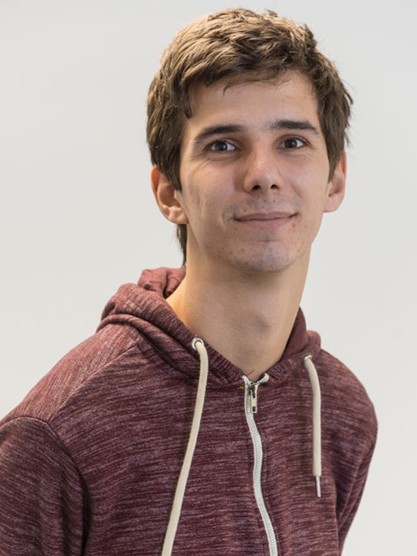
Dr Ben Davies
What is the focus of your current research?
The central focus of my research is on (inclusive) assessment and feedback. I am interested in effective ways to understand and celebrate the diverse array of knowledge that our students possess, while remaining sensitive to the ever-changing needs of the modern world. As a mathematician by training, I am motivated by a desire to understand and promote a more varied ‘assessment diet’ for students across disciplines, within and beyond mathematics.
How did your research interest develop?
My interest in assessment practice probably goes back a very long way but a particularly formative experience from my final year of undergraduate study comes to mind. I was always interested in ‘pure mathematics’, and in areas of mathematics most difficult to assess (and unrelatedly, sometimes considered more difficult than their ‘applied’ counterparts). Let’s call this module Group Theory 301. I, along with most of my friends, found the first 2/3rds of this module fairly easy and were confident of a good grade on the exam… That was, until we started studying old exam papers and noticed that question 5 was almost always impossible. It was always related to the final few weeks of material which we had only dubiously understood, and this final question was always too difficult… That is, until we noticed that there was only ever three possible ‘Question 5’s that were cycled around on a precisely tri-annual basis. So… we all studied the solution to the question we knew we would be asked, memorised it, and reproduced it verbatim (with almost no real comprehension). Some even chose to answer it first to maximise the chances of remembering the notes studied in the hallway minutes before. Lo and behold, those of us who had picked up on this pattern got 100% on this question and the vast majority of us got a top-tier grade. On reflection, this story is arguably just a boring example of a clumsy exam writer underestimating the lengths that a lazy student will go to avoid actually learning. But for me, this sparked a deeper interest in what it means to truly ‘assess understanding’, particularly in areas of study for which precise and authentic success metrics are difficult to define. This interest only grew when I would tell this story (or similar ones) to students of other disciplines and they would find it deeply unremarkable that we had simply memorised a solution and regurgitated it as a marker of our expertise in the discipline…
What do you hope your research will contribute to your field or to society?
Unlike some researchers, I don’t have a grand theory of change. Nor do I have a fantasy that my current research is going to change the world. I consider myself fortunate to be in a position to make small, incremental and specific contributions to our understanding of the world, with the belief that an incrementalist approach to long-term change is the most sustainable route forward. As an education researcher and educator, I also see my research as intimately connected to my practice and those around me.
In the short-term, my biggest impact comes from involving non-research-active educators in my research with novel assessment method, supporting them (and their students) in thinking about diversifying their assessment diet and the resulting consequences.
What has been the best part of your work so far?
The biggest learning I have from my research in recent years is how highly I value the people I work with. This sounds trite, and to some extent it is. But, I’m very lucky to work with the people that I do and I have learnt that I work considerably better with folk I enjoy. Perhaps this is obvious and I’m embarrassingly late to the party on this, but it is true that I only really learnt this quite recently!
If I could go back and do something different, I would have spent more time diversifying my areas of study/expertise earlier. I would have studied more philosophy, and would have paid more attention to the cross-disciplinary value of other scholars earlier in my career (and as a student). Despite never really wanting to ‘be a mathematician’, I was very single minded when I was younger and believed that all other disciplines, while potentially interesting, where inferior to my own. I also avoided statistics like the plague until I was in grad school. With hindsight, this was clearly a mistake.
What are you currently most excited about in your research?
The obvious answers here all focus on generative AI and the future role of AI in assessment. Whether we like it or not, genAI will be part of assessment in the near future and in many ways, it already is (at least from the students’ perspective!). My research interests will focus on trying to understand the potential harm that rapid shift my create, while highlighting specific, targeted areas/practices/protocols that might harness the potential for good.